





















Back to Top
PoE Network Switches
-
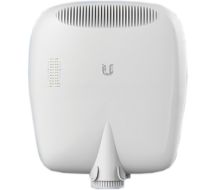 Ubiquiti Networks EP-S16 EdgePoint 16-Port Gigabit PoE-Compliant WISP Switch
IN Stock
Best Selling
Fast Shipping
Brand: Ubiquiti Networks SKU: EP-S16 Condition: NEW $0.00 $0.00 Call Us (+966 11 434 8700)
 -
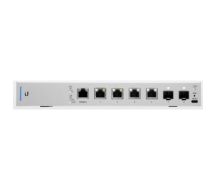 Ubiquiti Networks UniFi XG 6-Port 802.3bt PoE++ Enterprise Network Switch
IN Stock
Best Selling
Fast Shipping
Brand: Ubiquiti Networks SKU: US-XG-6POE Condition: NEW $0.00 $0.00
Call Us (+966 11 434 8700) -
 D-Link DGS-1008P/E network switch L2 Black Power over Ethernet (PoE)
IN Stock
Best Selling
Fast Shipping
Brand: D-Link SKU: DGS-1008P/E Condition: NEW $0.00 $0.00 Call Us (+966 11 434 8700)
 -
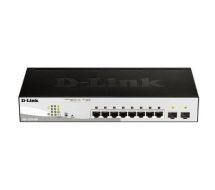 D-Link DGS-1210-08P network switch L2 Gigabit Ethernet (10/100/1000) Black Power over Ethernet (PoE)
IN Stock
Best Selling
Fast Shipping
Brand: D-Link SKU: DGS-1210-08P Condition: NEW $0.00 $0.00
Call Us (+966 11 434 8700) -
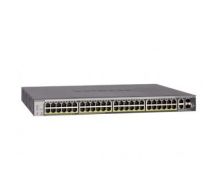 Netgear S3300-52X-PoE+ L2/L3 10G Ethernet (100/1000/10000) Black Power over Ethernet (PoE)
IN Stock
Best Selling
Fast Shipping
Brand: Netgear SKU: GS752TXP-100NES Condition: NEW $0.00 $0.00 Call Us (+966 11 434 8700)
 -
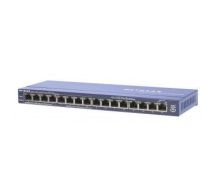 Netgear FS116PEU network switch Fast Ethernet (10/100) Power over Ethernet (PoE)
IN Stock
Best Selling
Fast Shipping
Brand: Netgear SKU: FS116PEU Condition: NEW $0.00 $0.00
Call Us (+966 11 434 8700) -
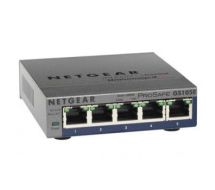 Netgear GS105PE-10000S 5-Port PoE Gigabit Ethernet Plus Switch
IN Stock
Best Selling
Fast Shipping
Brand: Netgear SKU: GS105PE-10000S Condition: NEW $0.00 $0.00
Call Us (+966 11 434 8700) -
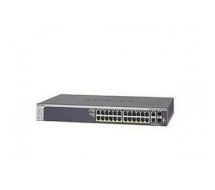 Netgear S3300-28X-PoE+ L2/L3 10G Ethernet (100/1000/10000) Black Power over Ethernet (PoE)
IN Stock
Best Selling
Fast Shipping
Brand: Netgear SKU: GS728TXP-100NES Condition: NEW $0.00 $0.00
Call Us (+966 11 434 8700) -
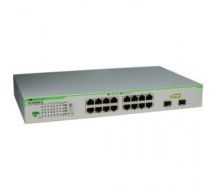 Allied Telesis AT-GS950/16PS-50 Gigabit Ethernet (10/100/1000) Power over Ethernet (PoE)
IN Stock
Best Selling
Fast Shipping
Brand: Allied Telesis SKU: AT-GS950/16PS-50 Condition: NEW $0.00 $0.00 Call Us (+966 11 434 8700)
 -
 Aruba 5412R 92GT PoE+ and 4-port SFP+ (No PSU) v3 zl2 Switch (JL001A)
IN Stock
Best Selling
Fast Shipping
Brand: HPE SKU: JL001A Condition: NEW $0.00 $0.00 Call Us (+966 11 434 8700)
How to Choose the Best PoE Network Switches in Saudi Arabia
If you are looking for a cost-effective, resilient, and flexible network deployment in Saudi Arabia, you must install PoE switches. These network switches combine data and power in one cable, making them suitable for networks working in harsh outdoor conditions, which is a common characteristic of the climate conditions of various KSA regions, including Riyadh, Jeddah, and the like.
In addition, PoE switches are very flexible and feature-packed, allowing network administrators to install them for various sectors such as corporate environments, smart building automation, security systems, industrial applications, and intelligent transportation systems. However, there are multiple PoE switch manufacturers in the Kingdom, including Ubiquiti, TP-Link, Hikvision, Dahua, and the like.
These brands offer network switches in various configurations and capacities, making it hard sometimes for network admins to choose the best switches that meet their needs in KSA. We have written this write-up to help you solve this puzzle. We will dwell upon PoE comprehensively, including its benefits for Kingdom-based businesses and offices, so that you can make a better choice.
Benefits of Installing PoE Switches in Saudi Arabia:
For countries like KSA, where businesses and offices are expected to follow strict rules and regulations, the network infrastructure must be resilient and flexible. In this backdrop, PoE switches are recommended for several compelling reasons:
-
Power and Data Over Ethernet:
This is a standalone feature of PoE switches. They can deliver both data and power through one Cat5 or Cat6 Ethernet cable. You don’t need to install separate cables for your network devices, such as IP cameras, VoIP phones, access points, routers, or other PoE-compatible equipment.
It helps you cut down both cable clutter and cost, making your workspace aesthetically more appealing and easy to manage. This comes in handy in buildings that have limited power outlets, which is a common problem in Saudi Arabia.
-
Multiple Device Connections:
PoE switches in Saudi Arabia come in various port configurations, such as 8-port PoE switches, 16-port PoE switches, 24-port PoE switches, and even industrial-scale 48-port PoE switches. This wide-ranging port density can help you connect several devices at a time.
For instance, with an 8-port PoE switch, you can connect 8 devices, which can be 8 surveillance cameras in a CCTV system, or they can be access points for extending the network of your capacity. This flexibility adds to the future-proofing of Power Over Ethernet switches. You can add as many devices, say IP cameras, as you like without a hassle.
-
Easier Troubleshooting:
Troubleshooting IT equipment becomes very easy with the help of PoE network switches. They come with a status light, helping you get immediate feedback regarding the proper functioning of connected devices. If there is an indication of malfunctioning, all you need to do is check the port or cable for quick troubleshooting.
This ease in diagnostics becomes even easier with PoE Managed and PoE Smart Ethernet switches. They support remote monitoring and troubleshooting as well as management features.
-
Safety Measures:
PoE Ethernet switches come with safety measures to prevent damage to incompatible networking and other devices. If a non-compatible device is connected to PoE switches, they recognize it immediately and don’t provide power, preventing any potential damage.
Now that we have discussed in depth the basics of PoE switches, let’s move ahead to see what types of PoE switches are available in Saudi Arabia that you can buy online.
Common Applications of PoE Switches in KSA:
Normally, PoE switches are preferred where electrical circuitry is not available. Here are some common applications in the Kingdom.
-
Voice Over Internet Protocol
-
Wireless Access Points
-
Building automation
-
Factory automation
-
Intelligent transportation system
-
Retail displays
-
Manufacturing execution system
-
Security system
They can also be deployed in various industrial applications. For instance, industrial-grade PoE switches are suitable for:
-
Quality inspection, monitoring, and asset tracking in harsh industrial settings.
-
Environment monitoring sensors
-
Industrial lighting
-
Factory interconnectivity
Types of PoE Switches:
The IEEE (Institute of Electrical and Electronics Engineers) defines types of PoE switches on the basis of output level. The IEEE divides PoE switches into 4 broad categories:
-
Type 1 (802.3af Standard) PoE Switches
-
Type 2 (IEEE 802.3at Standard) PoE switches
-
Type 3 (IEEE 802.3bt Standard) PoE switches
-
Type 4 (IEEE 802.3bt Standard) PoE switches
-
802.3af Standard PoE Ethernet Switches:
It is also known as a PoE switch, which was introduced back in 2003. They come with two wire pairs, one for data transmission and another for power supply. They can provide up to 15.4W (watts) of power; however, due to power dissipation in the cable, the actual output available for connected devices is around 12.95W.
-
IEEE 802.3at Standard) PoE+ switches
They were introduced in 2009, and PoE+ switches represent the boosted version of PoE switches. They can provide theoretically 30W of power output, which, after power dissipation is accounted for, remains 25.5W for connected devices.
Similar to PoE Ethernet switches, they also come with two wire pairs, one for power and another for data transmission.
-
IEEE 802.3bt Standard) PoE++ switches:
They are called 4PPoE (Four-Pair Power over Ethernet) or Ultra PoE. They were introduced in 2018, and they are designed to utilize all four pairs of wires in Ethernet cables. Therefore, they can support 60W of power output. However, devices receive 51W of power due to power dissipation.
-
Type 4 (IEEE 802.3bt Standard) PoE switches:
Type 4 PoE++ was also introduced along with the Type 3 PoE switch in 2018. Like type 3, it is also dubbed as 4PPoE, and it can use all four pairs of wires in Ethernet cables. However, it comes with a higher PoE budget that can be as high as 100W. However, connected devices receive 71.3W after cable dissipation.
PoE vs PoE+ vs PoE++: Which PoE Standard Best Meets Your Needs in Saudi Arabia?
Here is a table providing a comparative analysis of these IEEE standards.
|
Features |
Type 1 |
Type 2 |
Type 3 |
Type 4 |
|
Common name |
PoE |
PoE+ |
PoE++ |
PoE++ |
|
PoE Standard |
IEEE 802.3af |
IEEE 802.3at |
IEEE 802.3bt |
IEEE 802.3bt |
|
PSE Min. Output |
15.40 W |
30 W |
60 W |
90 W |
|
Voltage Range |
44V-57V |
50V-57V |
50V-57V |
52V-57V |
|
Application Examples |
|
|
|
|
Types of PoE Switches based on Management Features:
On the basis of management capabilities, PoE switches can be divided into 3 categories.
-
Managed PoE Switches
-
Unmanaged PoE Switches
-
Smart PoE Switches
-
Managed PoE Switches:
Managed Ethernet PoE switches are the most advanced network switches that support multiple management and configuration capabilities. For instance, managed network PoE switches support:
-
Remote management via configuration of VLANs, monitoring traffic, and setting QoS rules via web, SNMP, or CLI.
-
Security through support for 802.1X authentication, RADIUS, and access control lists.
-
Redundancy & Reliability through support for features like STP/RSTP, link aggregation, and dual power inputs.
-
Power Control via allocation of PoE budget per port, monitoring power usage, and rebooting devices remotely.
Here are popular PoE switches and brands in KSA that you can buy online as well.
-
UniFi Switch Pro Series (e.g., USW-Pro-48-PoE)
-
NETGEAR Smart Managed Pro Series (GS7xxTP, GS7xxTPP
-
HPE Aruba 2930M JF774A
-
UniFi Switch Enterprise 24 PoE (USW-Enterprise-24-PoE)
-
NETGEAR GS728TPPv2
-
NETGEAR GS752TPPv2
-
Unmanaged PoE Network Switches:
Unmanaged PoE switches are the simplest network switches, offering a plug-and-play switching solution to combine multiple Ethernet switches like switches, routers, access points, and the like. They don’t provide advanced management and configuration options, making them suitable for home networks, small offices, IoT deployment, and simple surveillance systems comprising a small number of IP cameras for home or small office security and surveillance.
Popular Unmanaged PoE Switches in Saudi Arabia:
-
TP-Link TL-SG1024P
-
Smart PoE Switches:
Smart PoE switches stand between managed and unmanaged switches when it comes to configuration and management capabilities. They can support some level of configurability through a web interface, but that is not as advanced as what managed switches offer.
Here is a list of popular smart PoE switches in Saudi Arabia.
-
Netgear GS308E
-
D-Link DGS-1100-05
-
Zyxel GS1200-8
How to Choose the Right PoE Switch in 2025:
Here are some factors that you should keep in mind while purchasing a PoE switch(s) for your home or office network in Saudi Arabia.
-
Wattage:
All PoE switches follow a specific IEEE standard, whether PoE, PoE+, or PoE++. Depending on their standard, they can deliver a pre-determined PoE budget. Therefore, you need to make sure that the power requirements of all devices connected to the PoE switch are less than the total PoE budget.
For instance, a PoE+ switch with a power budget of 240 watts can power up to 15 802.3af (15.4W) devices, or alternatively, it can power eight 802.3at (30W) devices.
Here is a table providing you with some hints regarding how to calculate the total PoE budget that you need.
|
Networking Devices |
Typical Max Power Requirement (Watts) |
PoE Standard Used |
|
IP Phone |
6 - 15 W |
IEEE 802.3af (PoE) |
|
Wireless Access Point (WAP) |
10 - 30 W |
IEEE 802.3at (PoE+) |
|
IP Camera (Standard) |
6 - 15 W |
IEEE 802.3af (PoE) |
|
PTZ (Pan-Tilt-Zoom) Camera |
30 - 60 W |
IEEE 802.3bt (PoE++) |
|
Video Door Phone |
7 - 15 W |
IEEE 802.3af (PoE) |
|
Network Router/Firewall |
15 - 30 W |
IEEE 802.3at (PoE+) |
|
Thin Client / Fanless PC |
25 - 60 W |
IEEE 802.3bt (PoE++) |
|
LED Lighting (smart building) |
60 - 90 W |
IEEE 802.3bt (PoE++)/Type 4 |
|
Digital Signage Screens |
30 - 60 W |
IEEE 802.3bt (PoE++) |
-
Date Rate:
Data rate is another major consideration. Each PoE switch can support a specific data rate, making it suitable only for specific needs. A switch can be of various types when it comes to data rate or speed. For instance:
-
Standard Ethernet network speeds (10 Base T networks),
-
Fast Ethernet (10 Base T and 100 Base T networks)
-
Gigabit Ethernet (1000 Base T networks)
-
Multigigabit Ethernet Switches (1/10G).
Here is a table that can give you some hints as to how to determine your total data rate needs.
|
Device Type |
Typical Data Rate requirement per port |
Recommended PoE switch |
|
Standard IP Camera (1080p) |
10 - 30 Mbps |
Gigabit Ethernet (1 Gbps) |
|
4K IP Camera / PTZ Camera |
50 - 150 Mbps |
Multi-Gigabit (2.5 Gbps or higher) |
|
Wireless Access Point (WAP) |
100 - 300 Mbps |
Gigabit Ethernet or Multi-Gigabit |
|
Network Router / Firewall |
100 Mbps - 1 Gbps |
Gigabit Ethernet |
|
Digital Signage |
30 - 60 Mbps |
Gigabit Ethernet |
|
IP Phone |
Up to 100 Mbps |
Fast Ethernet (100 Mbps) or Gigabit Ethernet (1 Gbps) |
-
Port Density:
Port density or configuration is another important factor that you should bear in mind. When it comes to the number of ports, PoE switches can be of various types. For instance:
-
8-Port PoE Switches
-
12-Port PoE Switches
-
16-Port PoE Switches
-
24-Port PoE Switches
-
48-Port PoE switches
Here are recommendations for which port density you need.
-
8- and 12-port PoE switches are suitable for small home and office networks.
-
16-port PoE network switches are recommended for small to medium networks deployed by growing startups and SMEs.
-
24-port PoE switches are recommended for medium-sized businesses or branch offices.
-
48-port PoE Ethernet switches are deployed in large enterprises, data centers, university campuses, core networking layers, and other advanced network infrastructure.
Final Thoughts:
The selection of the right PoE switch is very important for home and office networks in Saudi Arabia. PoE switches offer simplified network installation, cost-effective deployment of network devices, centralized management, and convenient network troubleshooting, configuration, control, and remote monitoring.
However, the Saudi market is flooded with multiple brands such as TP-Link, Ubiquiti Networks, Dahua, HPE, Netgear, among others, that are offering switches of various sizes and configurations. In this blog, we have attempted to help you understand the basics of PoE switches so that you make the right choice when it comes to the best PoE Ethernet switch in the KSA. Thanks for your reading.